“He [Jesus] was teaching the people in the temple courts. . .. He went on to tell the people this parable: ‘A man planted a vineyard . . . the owner of the vineyard sent his son [to the tenants of the vineyard] . . . they threw him out of the vineyard and killed him. He [the owner] will come and kill those tenants and give the vineyard to others.'”
[Jesus continued] ‘. . . give to Caesar what is Caesar’s, and give to God what is God’s.’ ‘Watch out that you are not deceived. For many will come in my name . . ..’ ‘ ‘Nation will rise against nation…great earthquakes, famines and pestilences…men will hate you because of me’. ‘By standing firm you will gain life’.
Each day Jesus was teaching . . . and all the people came early in the morning to hear him.”
May we be among those who each day come to Jesus to hear Him teach. May we be among those who stand firm.
Be blessed; be encouraged. Death has been defeated!
“He entered the temple…’My house’…Every day he was teaching…all the people hung on his words” Luke 19:45-48.
May we today, this week, every day, in wonder-filled anticipation, hang on His Words!
Mike
PS. I considered writing “hang on to” rather than “hang on”; but realized that “hang on His Words” reminded me of our need to die to self. It is Jesus, The Word (John 1- Logos, the Reason, the Fullness, the Completeness, the Infinite, the Meaning), that provides the Way to die to self. I am reminded of 2 Corinthians 5:17; “…if anyone is in Christ, he is a new creation, the old has gone, the new has come” May we hang on His every word!
As a retired forester, my wife knows that I like to read articles about trees. She recently sent me an article entitled, “An Old Tree Doesn’t Get Taller, But Bulks Up Like A Bodybuilder” written by Richard Harris on Science Short Wave, npr.org, January 16, 2014, and cited from an article in the Journal Nature. I think she may have been poking a bit of fun at me, age 73, referencing my height decreasing and the bulk around my waist increasing.
However, the term related to the growth pattern in trees, not people, that I learned in forestry school way back in the ’70s is “Indeterminate Growth”. It is not a new concept in forestry science, however, there are advancements relating to increased understanding.
The article states: Once trees reach a certain height, they do stop getting taller. So many foresters figured that tree growth — and girth — also slowed with age. “What we found was the exact opposite,” says Nate Stephenson, a forest ecologist with the U.S. Geological Survey, based in California’s Sequoia and Kings Canyon national parks. “Tree growth rate increases continuously as trees get bigger and bigger,” Stephenson says.
Basically, from what I remember, a tree will continue to grow as long as it is alive and receiving resources. The rate and continuation of growth are determined (limited) by “limiting factors”, such as light, nutrients, and water. Limiting factors can be extended beyond the resources noted above to include factors such as predation (animals, disease), environment, climate (temperature, precipitation), cataclysmic events, and vegetation population density.
The research, per this study, shows that although a tree does stop adding height it does not stop growing. The lack of addition to height may be environmental, physical, or genetic. I have read that gravity resistance makes water and nutrient transport difficult at great heights. It appears, however, that indeterminant growth in trees is an actual phenomenon. This growth in the girth of the tree adds strength, value, and appearance.
There is also the theory that it is not the total amount (availability or scarcity) of resources or other limiting factors available that control growth, but the one, scarcest resource. There may be plenty of everything except, say, a single resource such as water, and a tree would have difficulty thriving. Water, then, will be the main determining growth/survivability factor. This is called Liebig’s Law of the Minimum. This law has been applied to more than just plants and natural resource ecosystems. It has also been applied to human nutrition, economics, and marketing systems.
As I read this article about tree growth and thought about Liebig’s Law, it occurred to me that there are applications to universal and personal parallels related to human spiritual growth. And, I will emphasize here that I believe not all spiritual systems are healthy. A spiritual system based upon Biblical principles and precepts will result in spiritual growth. More on that later.
So, what may be the external or internal limiting factors relating to Biblical Spiritual Growth? Is spiritual growth indeterminant in the sense that it, in total or in part, may or may not stop? Let’s explore.
Purposely, not getting into a discussion on Biblical predestination, I will limit my conclusions to my experiences, and some limited botany. In botany, indefinite growth is not having all the axes (stems of a plant) terminating in a flower bud and so producing a shoot of indefinite length. The emphasis here is “all the axes”. This means some will terminate (stop growing in length), possibly flower, and possibly produce fruit; some will not. They will continue to add growth until some external or internal factor terminates the growth. Typically, that added and continued growth is positive for the plant. However, in a confined, ill-suited environment it may become detrimental.
In my experiences relating to spiritual growth, we (individuals with many options, choices, and growth potential –“axis”), can go down many paths (environment). Some options and paths may or may not result in growth. Some may or may not produce flowers, and may or may not bear fruit. Some may look good on the outside (flower) but result in dead ends, and cessation of growth, with no potential for meaningful reproduction. Those that produce little or no fruit resemble legalistic, works-based, spiritually devoid paths (environments) that have great length but no depth. The environments in which they exist are confined, perverted, and unhealthy. Spiritual growth and maturity resulting in healthy, viable fruit will be impossible. The person, (plant) must be removed from the suffocating environment and transplanted within an environment based upon Biblical principles and precepts. Without an infusion of the Holy Spirit (fertilizer), there will be no meaningful growth or reproduction.
This Biblical worldview (environment) is like someone opening a window in a stuffy, closed-up room and allowing fresh, clean air to enter. This is the freedom of God’s offering of undeserved grace to anyone who will receive it. Unconstrained from a legalistic, self-focused, self-righteous, works-based mindset that is based upon earning God’s favor, if accepted, will result in growth and fruit.
An unhealthy environment can be likened to poor soil where a seed will not flourish – possibly only from the lack of one necessary resource. To put this in terms of a spiritual system, a false system may have just enough resources (some truth), resulting in some growth but not flourishing or reproducing. It may have an infertile flower with no ability for pollination. It looks good on the outside but is dead on the inside. It withers and dies due to the lack of needed nourishment.
On the other hand, a healthy environment is like deep, rich soil that contains all of the resources necessary (Truth) for flourishing, flowering, and reproducing. The resulting “plant” can withstand a scorching sun or invading thorns. Jesus spoke of this. It is recorded in Mark 4 and Matthew 13.
“A farmer went out to sow his seed.As he was scattering the seed, some fell along the path, and the birds came and ate it up. Some fell on rocky places, where it did not have much soil. It sprang up quickly, because the soil was shallow. But when the sun came up, the plants were scorched, and they withered because they had no root. Other seed fell among thorns, which grew up and choked the plants. Still other seed fell on good soil, where it produced a crop—a hundred, sixty or thirty times what was sown. Whoever has ears, let them hear.”
I am a Christian (an imperfect but dedicated Christ-follower). Therefore; I believe that true spiritual growth means becoming more like the “Object” to which I am dedicated – Jesus Christ.
Striving for any other objective in my view would be spiritual growth deprivation. To become more like Jesus means incorporating His character into my life.
It means replacing my broken, sinful character with His unbroken, sinless character.
My spiritual journey included the study, and even briefly following, other spiritual disciplines over many years. This included walking alongside many others who were on their spiritual journeys. I experienced many “limiting factors” in my life and the lives of others that include environmental, social, familial, physical, resource availability, nutrient availability (physical, emotional), time, focus (faith), dedication, and yes, predation. Some of these have an inverse relationship to healthy spiritual growth. A great deal of dedication may be very helpful. A great deal of predation (opposition) may be very defeating.
Just one is all it takes!
I experienced the very real fact that even though I incorporated a long list of positive factors in my spiritual journey, just the lack of or minimization of one stunted my growth. Just the addition of one negative factor could knock me down, or cripple me spiritually – like a tree struck by one bolt of lightning. I could be dedicated to reading and studying my Bible. Looking on the outside like a productive “flower”, but on the inside, secretly pursuing just one sinful activity. Just one is all it takes!
Spiritual Phototrophism
photo by jametlene-unsplash
I have seen trees blown over yet with their roots still firmly secured in the soil and the tree living. Though scarred, and misshapen, and having their growth slowed by trauma, they lived with limbs and branches turning toward the sun – the source of light. In forestry, we know this as phototrophism (photo=light, trophism=turning in response to an external stimulus).
Spiritual phototrophism is me, and you, turning our faces to the Light of the world – Jesus Christ (John 8:12). In Him we can live and flourish despite our failures, setbacks, and disappointments. Our faces turned toward Him. Our roots are firmly planted in His, rich soil – thriving – even amid difficult circumstances.
Jesus said:
“Come to me, all you who are weary and burdened, and I will give you rest. Take my yoke upon you and learn from me, for I am gentle and humble in heart, and you will find rest for your souls. For my yoke is easy and my burden is light.” Matthew 11:28-30
An amazing thing about Jesus is that He does not stand off in some far corner of the universe saying “Get your act together, and then come to me.” He puts His arms around us and says, “Let’s work on all this stuff in your life together.” He gave up Heaven to walk in the “dirt” with us. He then transforms that dirt into a deep, rich soil into which we can secure our spiritual roots and live, despite the scars of failures. That is called Grace!
The Bible lists many factors related to spiritual growth. 2 Peter 1:4-7 records, “…make every effort to supplement your faith with virtue, and virtue with knowledge, and knowledge with self-control, and self-control with steadfastness, and steadfastness with godliness, and godliness with brotherly affection, and brotherly affection with love.” And an example of predation, ”sinful desire”.
How do these relate to spiritual growth? “…so that through them [these spiritual factors] you may become partakers of the divine nature, having escaped from the corruption that is in the world…”. You become more like Jesus!
Also, the book of Galatians in chapter 5 compares a list of “predations” that will stymy spiritual growth (sexual immorality, impurity, indecent behavior, idolatry, sorcery, enmity, strife, jealousy, fits of anger, rivalries, dissensions, divisions, envy, drunkenness, orgies, and things like these) and a list of factors that will reveal spiritual growth as well as maintain and grow it (the fruit of the Spirit is love, joy, peace, patience, kindness, goodness, faithfulness, gentleness and self-control). That growth may not add “height” but it will certainly add strength, value, and appearance (in the sense that others will be attracted). And that attraction will not be to you. It will be to Jesus.
The article (An Old Tree…noted above) continues:
“But the new study shows that when it comes to growth in trees — well, the sky’s the limit. And this leaves Phillips wondering whether trees might, in fact, have the potential to live forever. He tries to imagine how long a tree would live if you could prevent it from being blown down or succumbing to drought or disease.”
Well, with Jesus, regardless of strong winds, drought, or disease, the sky is not the limit, Heaven and an eternity with God is!
“For God so loved the world that He gave His one and only Son, that whoever believes in Him shall not perish but have eternal life.” John 3:16
May you, today, be blessed – be encouraged. Turn your face toward Jesus – believe, thrive, and grow!
I found this study mentioned in a devotional I was reading. I find it fascinating! I would place myself as a mix of the Traditional and Devoted Conservative and see myself in minor portions of the Exhausted Majority. It is lengthy but very interesting.
Take some time to look through the descriptions of the different “Tribes”. Do you see yourself in any of them? Read the conclusion. What do you think of this statement:
“America today needs a renewed sense of national identity, one that fosters a common vision for a future in which every American can feel that they belong and are respected. National identity can be the force that unifies people to overcome the polarization that has been the focus of this report.”
I do believe that America, on the world stage, is truly unique. The founding principles were radical for that time and still are today. Their ability to instill a sense of unity in people from all walks of life, though not unparalleled, was and is amazing. The above statement reminded me of the strength found in the national identity and unity instilled by God in the 12 tribes of Israel. Though the “tribes” eventually allowed factions and divisions to break them apart, their unity and identity as a “people” remains today. It also reminds me of early Christianity. Though denominationalism has resulted in division and factions I believe a Christ-follower can still go anywhere in the world and find unity and identity with other Christians as a common people.
I watched portions of the 1st GOP debate but tuned in too late to see it all. I believe that any of those on the stage would be better than what we have now! I remember that our first President argued against the establishment of political parties.
“Parties were factions that threatened to divide the electorate into competing groups who might use violence to advance their interests. Parties might also disrupt the separation of powers, especially in the case of unified government where loyalty to a party could interfere with the system of checks and balances. Parties also threatened to stand in the way of effective representation, with elected officials tempted to represent only fellow party members and to leave opposition groups without a voice in government.”
See: teachingamericanhistory.org
His opinion has clearly been shown to be correct!
However, though I grow tired of the political-party divisiveness, and bemoan laws and political decisions that do not agree with my world-view, the Scripture found in Romans 13:1, and 1 Samuel 8 resound in my head:
“Let everyone be subject to the governing authorities, for there is no authority except that which God has established. The authorities that exist have been established by God.” Romans 13:1
And the predictive words of God found in 1 Samuel 8 when the elders of Israel demanded “a king to rule us, like everybody else.” When Samuel presented their demand to God, He answered: “Go ahead and do what they are asking. They are not rejecting you. They’ve rejected me as their King.” (The Message). So what did God say the human king would do? Forced labor, cronyism, funneling resources for personal wealth, taking personal property, taxes, and more taxes. Sound familiar?
Somehow, I must trust that the powers and authorities God allows will ultimately serve to glorify Him and fulfill His will and promises. I have to ask myself what God is trying to teach me personally through these Scriptures. Perhaps that neither my hope nor my future lies in the hands or decisions of political parties or politicians. Both my hope and my future are in God’s hands.
So the conclusion of the matter is, “Don’t get too bent out of shape. Trust in God”. Right?
To perhaps clarify this, one more piece of Scripture came to my mind as I write this, Ezekiel 9:4: ”The Lord said to him, “Go through the midst of the city, even through the midst of Jerusalem, and put a mark on the foreheads of the men who sigh and groan over all the abominations which are being committed in its midst.” NASB
This “mark” was evidence that they were ”bent out of shape”, and distressed. Those “who sigh and groan” over injustice, violence, a breakdown of societal structure, rejection of God, and contempt for Godly precepts and principles. Those without the “mark” were killed. Though the context is another place and another time, the principle, in God’s eyes, is universally applicable.
Perhaps there is a measure of being “bent out of shape” that is appropriate when it comes to our contemporary society in America. Do I express this in a way that would earn me a “mark” on my forehead? Or am I simply a “ resounding gong or clanging cymbal” without love. (See 1 Corinthians 13). Do I express my groaning without understanding that my fellow “people” are not the enemy. The Enemy that has deceived them is the enemy!
I wondered, as I read the Study, how I can be more intentional about finding common ground; even with those whom I vehemently disagree. Should I even try?
The Apostle Paul wrote in 1 Corinthians 9:22: “I have become all things to all people so that by all possible means I might save some.” Hmmm, sounds like he is advocating finding common ground with those he finds within his area of influence. Perhaps, and especially, those who are disagreeable. Why? To turn them towards God. This does not mean that he is advocating surrender to the culture and throwing out God’s moral standards. Previously he said:
“Though I am free and belong to no one, I have made myself a slave to everyone, to win as many as possible. To the Jews I became like a Jew, to win the Jews. To those under the law I became like one under the law (though I myself am not under the law), so as to win those under the law. To those not having the law I became like one not having the law (though I am not free from God’s law but am under Christ’s law), so as to win those not having the law. To the weak I became weak, to win the weak.”
I refer you to Acts 17:22; 22:1-2 and 22:25-29 as examples of how Paul found common ground. He did not compromise or water down his message. But he was willing to, temporarily, set aside his God-given rights and his freedom in Christ. Why? He said, “for the sake of the gospel”. What about me?
I leave you with a portion of the words of a poem I memorized as a young man, Desiderata (Latin: “things desired”) by Max Ehrmann. Though not Scripture inspired by God, perhaps words that were inspired by Scripture.
Go placidly amid the noise and haste, and remember what peace there may be in silence. As far as possible without surrender be on good terms with all persons. Speak your truth quietly and clearly; and listen to others, even the dull and the ignorant; they too have their story.
Be blessed. Be encouraged. You are loved by God, and most assuredly by many others!
Well…we have just endured a whole month where the word “pride” has been in our faces and was glorified. It is on the news, billboards, signs, street corners, parades, the Internet, government buildings, and more. What does the word mean? What does it imply?
I am suggesting that we briefly explore that word, and perhaps, submit ourselves to a month of introspection. Hmmmm…no telling what that may reveal, or where it may lead!
I follow a blog named Pier Points. If you are interested you can access this blog on WordPress. Pier Points. A recent article that I found very interesting was entitled “To Defend Culture, Don’t Let Anyone Change Your Words”. I was reminded of the Scriptural admonition of how time and human cultures can change that which is good into bad and that which is bad into good. See Proverbs 14:12, 2 Timothy 4:3, and Isaiah 5:20. This article is well-written and espouses a Biblical Worldview with which I agree. I encourage you to read it, and the many other articles written by this author.
As I know it, a worldview is simply a set of principles and precepts through which a person filters their options, opportunities, decisions, and choices. A person may ask, “Is this decision when filtered through the principles and precepts of my worldview, the right or best choice for me or those around me?” If the answer is “no”, then a different decision must be made in order to agree with their worldview.
Other questions a person may ask themselves, as more relatable to the Pier Points blog, is “Does the contemporary cultural definition of this word, or these words, agree with my worldview?” If not, then not buying into the contemporary definition is the only way to be consistent with your worldview. Or, “Is the contemporary culture telling me to accept their definition; and if so, will doing this require me to discard the principles and precepts that define my worldview?” Some introspection may be needed to answer this question.
Romans 12:2 (ESV): Do not be conformed to this world, but be transformed by the renewal of your mind, that by testing you may discern what is the will of God, what is good and acceptable and perfect.
Two words came to mind as I read the Pier Points blog: “Pride”, and “Humble”. I asked myself, “Do the contemporary meanings of these two words agree with my biblical worldview filter, or not?”
Pride:
My Internet search for a contemporary definition:
A feeling of deep pleasure or satisfaction derived from one’s own achievements, the achievements of those with whom one is closely associated, or from qualities or possessions that are widely admired; consciousness of one’s own dignity; confidence, and self-respect.
My understanding of the emerging, cultural definition of “pride” seems to be focused a great deal on individuality as it relates to gender and sexuality, minimizing achievements or qualities that are widely admired.
My thoughts on this definition:
All about self-focus. Preoccupation with self.
When filtered through my biblical worldview:
I reviewed over 30 biblical scriptures relating to pride. The overwhelming majority relate pride to a self-centered person, with negative connotations and results. An excessive, even obsessive, preoccupation with self. Another form of rebellion against God. Self-worship.
In his pride the wicked man does not seek him; in all his thoughts there is no room for God. Ps. 10:4
Pride goes before destruction, and a haughty spirit before a fall. Proverbs 16:18
Relative to the emerging, cultural definition of pride, celebrated as “Pride Month”, focused on gender and sexuality it is at complete odds with my biblical worldview. God created man, male and female. Relative to human beings there are two genders, not many. Sexual relations between same-gendered individuals are rejected in biblical principles and precepts. Normalization of these relationships is rejected. For me to accept this definition and characterization of pride would require me to reject the principles and precepts of my biblical worldview. I cannot.
My definition of pride when run through my filter:
A state of mind that is primarily focused on and filled with the aggrandizement of self; filled with self-focus, empty of God-focus. Unconcerned, or uninterested in Godly character qualities.
Certainly, there are ways of expressing pride without the main focus on the self. “I am proud of my child.”, is an expression of love; but not as a way of highlighting one’s self-image as an exceptional parent.
I’m ok with not proud or arrogant, and courteously respectful. However,having a feeling of insignificance, inferiority, subservience, low rank, not important as far as status and quality are, again, all about self. I characterize these as a form of pride called “self-debasement”. It can be false humility and not a healthy way of looking at oneself.
Groups or individuals may use this self-characterization to gain status or improved, unearned economic standing through historical, contemporary, actual, or perceived suffering and humiliation relating to race, gender, age, nationality, etc. It can be used as a way of legitimizing low expectations of oneself or others. Many who have endured great suffering at the hands of evil people can rise above the self-debasement label and accomplish great things if they reject that characterization. Others, who accept this definition of “humble”, may not, and may continue to live in the past.
When filtered through my biblical worldview:
As a creation of God, one’s value is innate. It is not based on human class, cultural or economic status, rank, race, gender, age, or nationality. It is given by God and cannot be taken away by man, or manmade government. I see no Biblical reason for a person to feel insignificant. Yes, we are created with different gifts and talents that are used differently. Actual achievements will differ, and different levels of expression of those gifts and talents will be evident. However, we are each uniquely created individuals with innate, God-given value.
For you formed my inward parts; you knitted me together in my mother’s womb. Psalm 139:13
…but God shows his love for us in that while we were still sinners, Christ died for us. Romans5:8
For by the grace given me I say to every one of you: Do not think of yourself more highly than you ought, but rather think of yourself with sober judgment, in accordance with the faith God has distributed to each of you. Romans 12:3
Think of yourselves the way Christ Jesus thought of himself. He had equal status with God but didn’t think so much of himself that he had to cling to the advantages of that status no matter what. Not at all. When the time came, he set aside the privileges of deity and took on the status of a slave, became human! Having become human, he stayed human. It was an incredibly humbling process. He didn’t claim special privileges. Instead, he lived a selfless, obedient life and then died a selfless, obedient death—and the worst kind of death at that—a crucifixion. Philippians 2:5–8 (The Message: The Bible in Contemporary Language):
My definition of humble when run through my filter:
A state of mind that is focused on God and others; empty of preoccupation with self, filled with God-focus; focused on God’s character and incorporating His character qualities into one’s life.
God, through the Apostle Paul, written in Ephesians 5 says: …I urge you to live a life worthy of the calling you have received. Be completely humble and gentle; be patient, bearing with one another in love.
Introspection Month
I had to ask myself if it is even humanly possible, or worthy, to empty myself of excessive self-focus (pride-less) and fill that void with God and others-focus. After all, introspection is looking inward at the self. Asking the self questions. Examining the self. I came to the conclusion, based on my worldview filter, if, my goal was to be more others-focused, and God-focused it was both worthy and possible. The hope, the goal would be, to be enlightened. The goals and the purpose will guide the results.
I was reminded of the Scripture – the “filter”:
Do not be conformed to this world, but be transformed by the renewal of your mind, that by testing you may discern what is the will of God, what is good and acceptable and perfect. Romans 12:2 (ESV):
“…with God all things are possible.” Matt. 19: 26b
But when you pray, go into your room, close the door and pray to your Father, who is unseen. Then your Father, who sees what is done in secret, will reward you. Matt. 6:6
What I would not do during this Month of Introspection: I would not flaunt my broken, human nature, of which there is a great deal, for all to see and “admire”. I would not flaunt my self-perceived righteousness, seeking undeserved admiration. And it came to mind as I write this, that even sharing my thoughts about this with you may be a violation.
What I would do during this Month of Introspection. Test myself. Seek discernment. Seek renewal. Seek the will of God. Enter this time not on my own, but with the help and guidance of the Holy Spirit. Those who do not share a Biblical worldview can still ask questions like below.
For example, ask yourself these questions:
Who is God? Do I believe he exists? If so, do I have a relationship with Him? What is that relationship based upon?
What are my spiritual beliefs? What are they based upon?
If my beliefs were wrong, would I want to know? Would I have the courage to change them?
Is Truth my objective? If so, is there objective Truth?
Do I believe in a Heaven or a Hell? Why or why not?
Who is Jesus? Who do I say he is? What are his claims? Is he the Son of God? Did he resurrect from the dead?
Are all spiritual beliefs equally valid?
Are my lifestyle and choices honoring to God? Honoring to others?
What does the Bible say about gender and sexuality?
Do I want to be a better person? If so, do I rely only on myself to become better? Do I understand my need for God’s Spirit with this transformation?
What is repentance? What is prayer?
What is grace; mercy; justice? How do they apply to me? How do I apply them to others?
This contemporary celebration of what has been coined “Pride Month” is nothing to celebrate. It is rebellion against our Creator God. When I think about my own personal forms of rebellion, I cannot be pride-filled; I am humbled that God would still love me. My desire is to empty myself of rebellion and fill that void created with Godly character qualities.
Today…this month and beyond, celebrate! Not pride, but the truth that God loves you and me, and has given us the way, through Jesus Christ, the opportunity to empty ourselves of ungodly, preoccupation with self, and fill ourselves with God. A true reason to celebrate!
Upon hearing that a hate-filled group of people would be demonstrating near our church, I wrote the following to my family:
Dear Loved Ones,
I was in a discussion yesterday about how the “fall” (sin and rebellion against God) was part of God’s plan, in the sense that He knew ahead of time that man would rebel. We discussed our inability to fully understand His omniscience. I have had this conversation many times with others.
Knowing there are people, groups who have forgotten Christ’s teaching that only he who is without sin has the right to condemn. Those who are actively preaching hate, violence, and condemnation against certain groups of sinners (fellow rebels), falsely I believe, in His name…
how then should we live? How should we respond?
Christ and His sacrifice were foreknowledge before Earth’s creation! God, knowing we would “fall”, provided ahead of time for our redemption. Why? Because He loves us! Though we were and are very unlovable!
How then should we live? As temporary guests in the home of another. In obedience to Him, the owner of the home, with sincere love for one another (other guests) following His example of pure love. And, His Truth is Love.
How to convey His Truth in a loving way to the other guests (fellow rebels) is a challenge. Perhaps with warning, as a Light on a hill, but not with hate, violence, or condemnation.
The Scriptures were given to us to teach, correct, train, and rebuke when necessary. Why? To equip each other to do God’s work here on Earth. But not to condemn. Only He is without sin. Only He has this right.
We are just passing through to a destination prepared for us. With limited time here…how then shall we live?
Love one another…as He loves us…with Truth, forgiveness, compassion, grace, and mercy… as well as correction, and rebuke based upon His Word when necessary.
Dad (Mike, Grampy),
1 Peter 1:17–25 (ESV):
And if you call on him as Father who judges impartially according to each one’s deeds, conduct yourselves with fear throughout the time of your exile, knowing that you were ransomed from the futile ways inherited from your forefathers, not with perishable things such as silver or gold, but with the precious blood of Christ, like that of a lamb without blemish or spot. He was foreknown before the foundation of the world but was made manifest in the last times for the sake of you who through him are believers in God, who raised him from the dead and gave him glory, so that your faith and hope are in God.
Having purified your souls by your obedience to the truth for a sincere brotherly love, love one another earnestly from a pure heart, since you have been born again, not of perishable seed but of imperishable, through the living and abiding word of God; for
“All flesh is like grass
and all its glory like the flower of grass.
The grass withers,
and the flower falls,
but the word of the Lord remains forever.”
And this word is the good news that was preached to you.
A dear friend alerted me to an article entitled, “What a lesser-known Charles Dickens Christmas story teaches about loss” by Spencer Klavan, published December 23, 2022 in the Washington Examiner. The Dickens story is entitled, The Haunted Man and the Ghost’s Bargain.
The author of the article states:
“It’s the whole point of the thing, the reason why we can’t feel Christmas joy without Christmas sorrow. The two are bound together, as the child born in Bethlehem with songs of angels must one day go to the cross. It is what he came for.”
This Christmas, my 72nd. Late, by myself, almost morning the next day; the day after. I sat in my living room with one candle providing a soothing glow. It is the Christ-candle on our Advent candle display. I gaze at the light, the flickering shadows. It is a time of personal reflection, introspection, peace, melancholy, sadness, thankfulness, happiness.
This is not the first. Each year, since a child, I have this experience in different ways as my Christmas day slips away into the night and the day after. The relentless buildup culminating in expectations not fully realized. Never resulting in depression. Never debilitating. This mixture of joy and sorrow is always life-changing. Always healing.
Still, the reality of another Christmas, each second fleeing without hesitation into the night, finds me trying to hold it tightly in my grasp. I cannot. As with loved ones no longer present, sad they are no longer here, but so very thankful they were, we can only hold them in our memories, no longer in our arms.
The next day, the day after is nearly here, and I must embrace it.
May you experience Christmas joy, even amid Christmas sorrow. They are inseparable; they make us whole. Jesus was born a baby, died a man, raised to life eternal to provide us healing, wholeness, completeness. It is what He came for.
May you embrace His Christmas day gift. May you embrace the day after. It too is a gift.
On Christmas eve this year, with my children and grandchildren gathered, I had the opportunity to share three of my early Christmas memories, as a child and a young father.
The memories included annual Christmas traditions. Car rides with my dad and siblings on Skyline Drive to see the city lights, the opening of one gift each when we returned, which Mom placed under the tree while we were on our ride, and mom reading “A Visit from St. Nicholas”. We knew that more gifts would, miraculously, appear during the night while we slept. I remember waking up on the living room sofa while everyone else was asleep. I had, secretly and quietly, left my bed to try to get a glance of Santa.
Another memory, as young parents, Caroline and I started the tradition of watching the 1983, George C. Scott movie version of “A Christmas Carol”. Our children were very young when we began. The wonderful, amusing, and dramatic transformation of the “Bah! Humbug! stingy and mean-hearted” Ebenezer Scrooge to the kind, loving, charitable “good keeper of Christmas”, as originally portrayed by the author Charles Dickens in the 1800’s, has brought joy and a time of loving, family fellowship for years at Christmastime. Our favorite part, which each time brings smiles and laughter, is the baffled look on employee Bob Cratchit’s face when Scrooge doubles his salary and offers support for his disabled child. Though the end of the movie, not the end of the story. The sense of love and joy flows from the screen through the room and into our family relationships. Our children, especially our daughter who is now in her mid-40’s, have pledged to continue this tradition when Caroline and I are no longer there, in person, to share. I love it!
The third and final memory I shared this Christmas eve with my family was regarding my first memories of attending church on Christmas eve when I was about 8 years old. It was at that time that the reality, and the impact, of the birth of Jesus began to take hold in my young mind. The reading of the biblical account in Luke chapter 2, the lights, the singing, the candles, feeling of love and safety that filled my young senses remain with me today. They are a part of me. I shared this with my family and then read from Luke chapter 2.
As I read, the sensations and memories listed above came to the surface. With tears rolling down my face I, haltingly, read, “Do not be afraid. I bring you good news of great joy that will be for all the people. Today in the town of David a Savior has been born to you, he is Christ the Lord. This will be sign for you: You will find a baby wrapped in clothes and lying in a manger.” I tried to explain to my grandchildren, who were clearly wondering why their grampy was crying, that my childhood memories of this story were still very real to me. And the amazement of what Jesus did for us has continued to grow in my life. They may not fully understand, however, I believe they will remember this time of sharing traditions and memories.
May you be blessed with your own family traditions and memories. May you be encouraged. May you be amazed. You are loved!
“Glory to God in the highest, and on earth peace to men on whom his favor rests.”
Clear and Present Danger…the Fourth Branch of Government (Federal Bureaucracy) …Rational Control
“Bureaucracies are inherently antidemocratic. Bureaucrats derive their power from their position in the structure, not from their relations with the people they are supposed to serve. The people are not the master of the bureaucracy, but its clients.” Alan Keys
My wife and I watched the 1994 “Clear and Present Danger” movie the other night. The movie is about dangers that exist both inside and outside of our Country: politicians rather than Statesman, drugs, drug cartels, concern for self over concern for others, political expediency, politically appointed bureaucrats with a lust for power. These are clear and present dangers. Sound familiar? Not much has changed since 1994.
The movie, however, ends with a sense of hope. A feeling that because one person of courage, one with a clear understanding of that which is right as opposed to that which is wrong, can make a positive difference. You walk away from the movie feeling like those politicians who broke the law and were willing to sacrifice the lives of others on their self-centered alters for power would face justice and be held accountable.
I looked at my wife and said, “I wish I could see this played out in the real world. Instead, I see our Constitution degraded and ignored, laws openly disregarded by bureaucrats and elected politicians with no negative consequences or accountability, and mountains of rules and regulations enforced by unelected bureaucrats. A cursory look at the flouting of the US immigration laws by the DHS, the CDC mandates (“guidelines”) from unelected doctors regarding health, the bloated IRS tax code, the politization of the Department of Justice, the EPA politicization of energy production, the forced taxpayer funding of Planned Parenthood, which is responsible for nearly 9,000,000 abortions since 1967, to name a few, all tell the story of the power of the unelected Fourth Branch of Government.
“The greater the power, the more dangerous the abuse.” Edmund Burke
Bureaucracy is not necessarily evil. It can be considered a necessary-evil. Any Organization, private or government requires a system, and those who manage the system in order to operate successfully. The danger is that and the system and the system managers may become more interested in controlling than serving. Max Weber, German Sociologist, (1864-1920) was an important theorist regarding bureaucracy.
Although he was not necessarily an admirer of bureaucracy, Weber saw bureaucratization as the most efficient and rational way of organizing human activity and therefore as the key to rational-legal authority, indispensable to the modern world. Furthermore, he saw it as the key process in the ongoing rationalization of Western society. Weber also saw bureaucracy, however, as a threat to individual freedoms, and the ongoing bureaucratization as leading to a “polar night of icy darkness”, in which increasing rationalization of human life traps individuals in a soulless “iron cage” of bureaucratic, rule-based, rational control. (Bureaucracy – Wikipedia)
“Rational control”…very interesting! When a bureaucracy and/or a bureaucrat becomes overtly politically and/or career motivated he/she then becomes the master rather than the servant. This is rational control. The bureaucrat controls that which is considered reason or logic. The bureaucrat justifies this through the belief that they are virtuous by creating/providing order and efficiency. This may be true, if, the person being “served” chooses this “service” as an option to other services through choice and transparency, thereby recognizing other reasoning or logical arguments. If there are no other options offered, the bureaucrat is an intruder into privacy, takes control, and thereby prevents virtuous choices by those being controlled. The bureaucrat becomes the “thinker”, the “provider”, the “decision maker”. The bureaucrat become the “convenience” that we just cannot do without. That’s the plan! Bigger government. More bureaucrats. More control.
The bureaucrat becomes the light that turns on automatically when I enter the room. He becomes the toilet that flushes when I stand up. He offers no options for a manual light switch or a toilet handle. He says, “Let me do it. Let me take care of you. Let me control your life from cradle to grave. No worries.”
I need to note here that I include professional, life-long, no term-limit politicians as bureaucrats. Conservative and liberal included. If government is their career, then rational control is their focus. They are simply elected bureaucrats who have convinced enough people that they can be their provider. Term limits is the only way to relieve them of their position within the bureaucratic structure.
Redistribution of tax dollars for the funding of abortions is an example of rational control. Many find this morally wrong and do not want to fund this activity. The bureaucrats and politicians who support this also see this activity and their control as virtuous. They then manipulate the redistribution to silence those who object. Transparency resulting in virtuous choice by the governed is not an option to them because it does not conform to their worldview. However, for any action to be truly virtuous there must be choice. The freedom to engage in thoughtful consideration of choices must be an option. To the bureaucrat this is time consuming and unnecessary. Surreptitious manipulation becomes the standard for best practices.
The quote below from Right to Life of Michigan explains how a bureaucratic “accounting gimmick” through Medicaid results in feigned transparency and governmental rational control:
“There is zero meaningful separation of staff, facilities, and operational costs at Planned Parenthood clinics between government-funded services and abortions. Federal contract rules allow taxpayer funds to pay staff salaries, supplies, and facility costs on a “pro-rated” basis. It is merely an accounting gimmick; tax dollars literally pay the rent and energy costs to keep abortion clinics running and funds staff that help perform abortions. Planned Parenthood claims abortion is inseparable from their mission, and with half of their budget coming from taxpayers, it’s safe to say our tax dollars are inseparable from their abortion mission.”
The mandate to wear a mask for the greater good is another example. “Wear a mask or lose your job” says the bureaucrat. “Wear a mask or you can’t travel.” “Wear a mask, get a shot, get two shots, get three shots, even though it does not seem to make a positive difference. I will decide who is “essential” and who is not. Trust me! I will take care of you!” Control!
Polar night of icy darkness Max Weber
Are we entering, or are we in that “polar night of icy darkness” predicted by Max Weber? Perhaps. I can’t turn on a news broadcast without getting a feeling of despair and a sense of being controlled. But is there hope? The end of the movie implied that there is hope to be found in selfless individuals who are willing to take the risk on the side of truth. I have not lost faith in that. However, I don’t believe there will be any lasting hope or release from the darkness through purely human efforts or human governments. Christ is my Hope.
It was at this point in writing down my thoughts that I sat back and asked myself why I started writing about this in the first place. Two reasons:
First, this morning I decided to read the Declaration of Independence. This is something I have done many times near or on the 4th of July. However, this time, I spent time not only reading the document but also spent time reading the names of the signers. I thought about the extraordinary sacrifice they and their families must of endured, and the courage they exhibited by signing this document.
They were from many backgrounds. There were lawyers, merchants, surveyors, doctors. and clergy. They had families, property, hopes and dreams. They were ordinary people. There were 56 signers. The youngest signer was Edward Rutledge, at 26 years old, and the oldest was Benjamin Franklin, at 70 years old.
I was surprised when I found that George Washington was not a signer. He was in New York with the Continental Army at the time. It was George Washington, his example of unwavering servant leadership, his acceptance to serve as the first President and refusal to rule as King, along with his voluntary limitation on terms of service as President that demonstrated to me he was a Statesman, not a bureaucrat or professional politician. The contrast between Washington and our President today could not be more striking! I had to organize my thoughts in writing. It is therapeutic.
Second, I had just listened to our Pastor Sunday morning speak about how to have certainty in uncertain times. He referred to examples in Scripture (John chapters 20 and 21) of how Jesus’ followers dealt with the uncertainty they experienced after His crucifixion. The followers’ responses to this extreme period of uncertainty included: an emotional response, a fear-filled response, doubt-filled response, and a do-nothing response. He pointed out that although they experienced this myriad of responses to their uncertainty they, ultimately, came to understand that Jesus himself was the answer to finding certainty in uncertain times.
After listening to our Pastor I thought about the parallels between how Jesus’ followers handled the uncertainty in their time, and how the signers of the Declaration of Independence may have handled their uncertainty. Clearly there was emotion, there was fear, there was doubt, and I found that there was a period of do-nothing time. There was a period of months following the first signature of John Hancock, July 4th 1776, to the final signature of Thomas McKean believed to have signed the Declaration as late as March of 1777, or as late as 1781. A period of “do-nothing” may be too strong of a term to use, although there were some Delegates to the Continental Congress who voted for independence but chose not to sign the Document. Why? Perhaps fear or doubt.
There was, however, clearly a time of reflection and introspection for both Jesus’ followers and the signers of the Declaration. Jesus’ followers decided to go back to what they knew and understood…they went fishing (John 21:3). The signers of the Declaration had to go back to their jobs and families. Some were literally fleeing from the British. Thomas McKean, the last to sign, wrote to John Adams about being, “hunted like a fox by the enemy, compelled to remove my family five times in three months, and at last fixed them in a little log-house on the banks of the Susquehanna.” McKean had five children and his second wife pregnant with number six at the time. (The Last Signers of the Declaration by Karen A. Chase – May 30, 2019).
So…can we, today, find certainty in times of uncertainty? Can we engage with the “clear and present dangers” that we face in our time with confidence of success? Can we deal with bureaucracies and bureaucrats who see virtue in controlling our lives and thoughts? I believe the answer is a resounding “Yes!”.
Jesus’ followers certainly found it through Scripture, through prayer, through trust, through faith…in Christ Jesus. What about the Declaration signers? They wrote in the Constitution preamble:
We hold these truths to be self-evident, that all men are created equal, that they are endowed by their Creator with certain unalienable Rights, that among these are Life, Liberty and the pursuit of Happiness.
For more insight into this I refer you to the article, “The Christian Setting of the Declaration of Independence”, Christian Heritage Fellowship by Dr. Stephen Flick, July 1, 2022.
Jesus said:
“Come to me, all you who are weary and burdened, and I will give you rest. Take my yoke upon you and learn from me, for I am gentle and humble in heart, and you will find rest for your souls.” Matthew 11: 28,29
Today, July 4, 2022, be blessed, be encouraged. God has not left us drifting aimlessly in an ocean of fear and doubt. He has given us the freedom of choice and the ability to respond with virtue in the face of, seeming, uncertainty. Happy Independence Day!
I thought I would repost this in light of the recent Supreme Court ruling. This battle will continue. Not so much that it is a Constitutional issue, or a rights issue, or a physical issue, but because it is a spiritual issue. Listening and following the Spirit of God is the only solution.
Also, my little granddaughter Mackenzie recently celebrated her 9th birthday. A beautiful celebration of the birth of a beautiful child!
“I’ve noticed that everyone who is for abortion has already been born.”
President Ronald Reagan
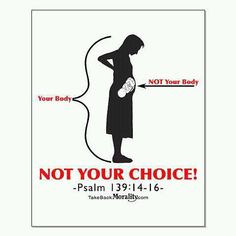
A friend sent me an illustration of the profile of a pregnant woman, which included an unborn baby in the mother’s womb. The illustration makes a point of clearly stating and showing the woman has a body…and…the baby has a body…not the same body. The illustration, meant to challenge those who would use the statement, “it’s my body” or “it’s your body” as an argument to justify the abortion of an unborn baby.
This illustration is logical, convincing, powerful and backed up by science. It should give anyone, who may consider the “it’s my body” argument to be valid, pause…to reconsider. The baby’s body is no more the mother’s body than it is the father’s body. Neither parent has the right to declare if the baby should live or die.
Person: a human being, especially as distinguished…




 Michael Rueffert...In the Freedom of Forgiveness...